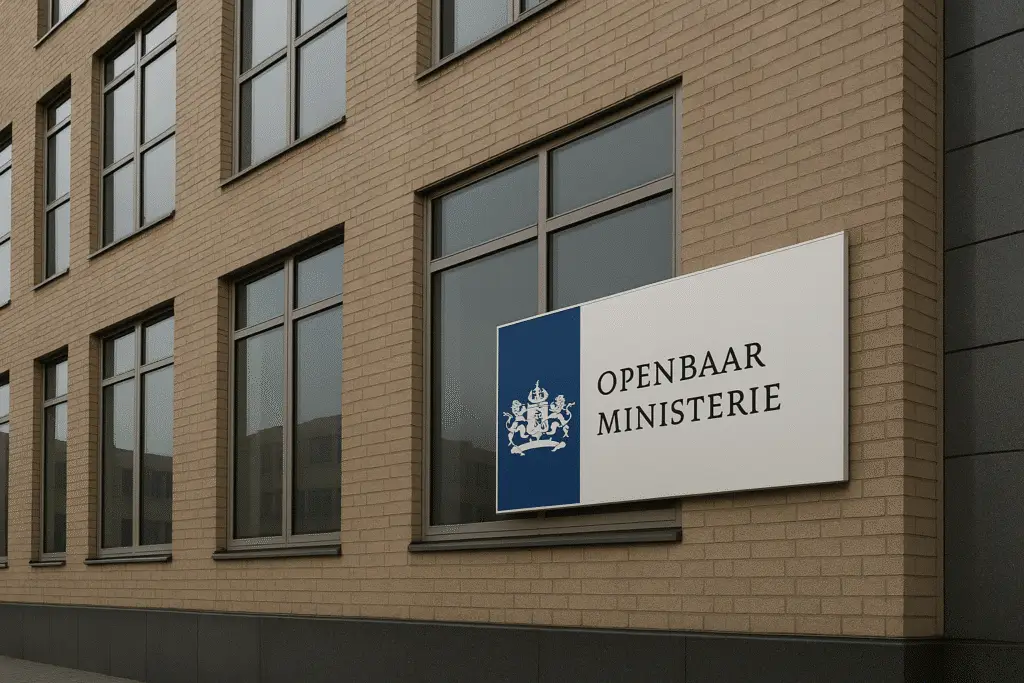
A penalty order (strafbeschikking) is a punishment that the Public Prosecution Service (Openbaar Ministerie) imposes itself, without a judge, for minor offences and crimes carrying a maximum of six years’ imprisonment (Article 257a Sv). It can never contain a prison sentence, but it does establish guilt and is registered in your judicial documentation; if you disagree, you must file an objection (verzet) within fourteen days (Article 257e Sv) and you must not pay first.
सामग्रीको तालिका
जरिवाना आदेश भनेको के हो?
The penalty order was introduced by the Wet OM-afdoening and is regulated in Articles 257a and following of the Code of Criminal Procedure (Sv). It replaced the old settlement offer (transactie), which you could refuse. A penalty order is a decision: the punishment applies unless you actively object.
A penalty order is not a court conviction, but it contains a finding of guilt and is recorded in the judicial documentation system. Under Article 257e(1) Sv, paying it voluntarily means you give up your right to object. Treating it like a parking ticket is the most expensive mistake people make.
When may a penalty order be issued?
Under Article 257a(1) Sv the public prosecutor may issue a penalty order for any minor offence (overtreding) and for crimes (misdrijven) carrying a statutory maximum of six years’ imprisonment or less. Examples are shoplifting, simple assault, threats, vandalism and driving under the influence.
Other authorities can also issue penalty orders. Under Article 257b Sv designated investigating officers may impose fines for offences appointed by order in council. Under Article 257ba Sv designated public bodies may issue penalty orders within set limits, under the supervision of the Board of Procurators General. Whoever issues the order, the Central Judicial Collection Agency (CJIB) handles collection.
Which penalties can a penalty order contain?
Article 257a(2) and (3) Sv contain an exhaustive list, and imprisonment is not on it. The order can contain:
- a community service order (taakstraf) of at most 180 hours;
- a fine, up to the maximum for the offence;
- withdrawal of seized items from circulation (onttrekking aan het verkeer);
- a compensation measure for the victim (schadevergoedingsmaatregel);
- a driving disqualification of at most six months;
- instructions, such as a payment to the Violent Offences Compensation Fund or instructions on your behaviour during a probation period of at most one year.

When must you be heard before the order is issued?
Under Article 257c(1) Sv a penalty order with community service, a driving disqualification or behavioural instructions may only be issued after the public prosecutor has heard you and you have said you are willing to comply. At the start of that hearing (OM-hoorzitting) you must be told that you can request a lawyer.
Under Article 257c(2) Sv a penalty order with a fine and compensation measure totalling more than €2,000 may only be issued after you have been heard with the assistance of a lawyer. The hearing is the last moment to influence the penalty without going to court. Our article on the OM सुनुवाइ र जरिवानाको आदेश यो कसरी चल्छ र के तयारी गर्ने भनेर व्याख्या गर्छ।
What does a penalty order mean for your criminal record?
A penalty order for a crime is registered in the judicial documentation system, which most people call the criminal record (strafblad). For a minor offence, registration depends on the type and level of the penalty.
The registration matters when you apply for a certificate of good conduct (Verklaring Omtrent het Gedrag, VOG). Justis assesses whether the recorded offence, if repeated, would be a risk for the specific job, so the same entry can be harmless for one job and decisive for another. It can also matter for regulated professions, firearms and taxi permits, and residence applications; see our articles on a आपराधिक अभियोग र तपाईंको निवास अनुमति र मा आपराधिक रेकर्ड र रोजगारी.
How do you file an objection (verzet), and within what period?
Under Article 257e(1) Sv you have fourteen days after the order was handed to you in person, or after a circumstance shows that you knew about it. For a fine of €340 or less for a minor offence committed no more than four months before the order was sent, you have six weeks after sending.
Under Article 257e(2)-(4) Sv you file the objection with the public prosecutor’s office (parket) named in the order: in person, by a signed letter or through the designated electronic service. State your name, the case number (parketnummer), the date you received the order and your reasons. Send a letter by registered post so that the date cannot be disputed, and keep the envelope.
Do not pay if you intend to object. Under Article 257e(1) Sv voluntary payment counts as giving up your right to object, and so does a written waiver signed with a lawyer’s assistance.
What happens after you file an objection?
Under Article 257f(1) Sv the public prosecutor either withdraws the penalty order or brings the objection and the file before the court. You are then summoned at least ten days before the hearing.
The court does not review the prosecutor’s decision but decides the case afresh; under Article 257f(3) Sv the description of the conduct in the order serves as the charge. The court may acquit you or impose a lower penalty, but it is not bound by the penalty in the order and can also impose a heavier one within the statutory limits. Base your objection on the facts, the evidence or the proportionality of the penalty, not on general dissatisfaction. Our article on the नेदरल्याण्ड्समा फौजदारी अदालतको सुनुवाइ describes the hearing.
तिर्नुभएन भने के हुन्छ?
An unpaid penalty order goes to the CJIB, which sends reminders with statutory increases. If that fails, recovery follows, such as attachment of income, a bank account or property.
If full recovery is not possible, the Public Prosecution Service can ask the court for permission to use coercive detention (gijzeling) for a fine imposed in a penalty order (Article 6:6:25 Sv). Coercive detention is a means of pressure, not a substitute sentence: the debt remains. If you genuinely cannot pay, ask the CJIB for a payment arrangement early, because the room for arrangements narrows as the file progresses.
How does a penalty order differ from a traffic fine and a summons?
Three kinds of letters are all called a fine, but they have different legal routes. A traffic fine under the Mulder Act (Wet administratiefrechtelijke handhaving verkeersvoorschriften) is an administrative sanction: you appeal to the public prosecutor under Article 6 of that Act and then to the subdistrict court (kantonrechter) under Article 9.
| पक्ष | जरिवाना आदेश | Mulder traffic fine | अदालतमा समन |
|---|---|---|---|
| प्रकृति | Criminal; finding of guilt by the Public Prosecution Service | Administrative sanction for a minor traffic violation | Criminal charge decided by a judge |
| दण्डहरू | Fine, community service up to 180 hours, driving ban up to six months, compensation measure, instructions; no prison | Fixed amount only | All penalties the law allows, including prison |
| चुनौती | Objection (verzet) within fourteen days | Appeal to the public prosecutor within six weeks, then the subdistrict court | Defence at the hearing; appeal against the judgment |
| आपराधिक रेकर्ड | Yes for a crime; for a minor offence only in certain cases | होइन | हो, दोषी ठहरिएपछि |
Most speeding and parking fines are Mulder fines and do not reach the criminal record. See our article on नेदरल्याण्ड्समा तीव्र गतिमा गाडी चलाउनेलाई जरिवाना; driving under the influence is a criminal offence, covered in our article on मदिरा सेवन र गाडी चलाउनु.
What should you check when you receive a penalty order?
- The date you received it: the fourteen-day period of Article 257e Sv runs from that moment.
- Whether the offence is a crime, so that it will be registered and may affect a VOG, a licence or a residence permit.
- Whether the facts and the evidence in the order are correct.
- Whether the penalty is proportionate compared to similar cases.
- Whether you were heard where Article 257c Sv requires it.
- That you do not pay before you have decided not to object.
What will change with the new Code of Criminal Procedure?
A new Code of Criminal Procedure has been adopted, with entry into force currently planned for 2029; no firm date has been set. Until then, the current Code and the article numbers in this article continue to apply in full.
What can we do for you with a penalty order?
हाम्रो आपराधिक वकीलहरू act for you before and after a penalty order is issued.
- We check the file to see whether it supports the accusation.
- We advise on whether an objection is worth the risk of a court hearing.
- We attend the OM hearing with you under Article 257c Sv.
- We draft and file the objection within the fourteen-day period.
- We defend you if the case goes to the criminal court.
- We advise on the consequences for a VOG, a professional registration or a residence permit.
सारांश
- The Public Prosecution Service can impose a penalty order for offences carrying up to six years’ imprisonment, without a judge (Article 257a Sv).
- It can contain a fine, up to 180 hours of community service or a driving ban of up to six months, but never prison.
- A penalty order for a crime is registered and can affect a VOG.
- File an objection within fourteen days; paying means giving up that right (Article 257e Sv).
- After an objection the court decides afresh and is not bound by the penalty in the order.
बारम्बार सोधिने प्रश्नहरू
Can the Public Prosecution Service impose a prison sentence through a penalty order?
No. Article 257a Sv does not allow imprisonment. Only a judge can impose a prison sentence. A penalty order can contain up to 180 hours of community service.
Will a penalty order give me a criminal record?
A penalty order for a crime is always registered in the judicial documentation system; for a minor offence only in certain cases. The registration can affect a certificate of good conduct (VOG).
Can I still object if I have already paid?
No. Under Article 257e Sv voluntary payment counts as giving up the right to object. Take advice before you pay if you intend to contest the order.
यदि म जरिवाना आदेश तिर्न सक्दिन भने के हुन्छ?
The CJIB sends reminders with statutory increases and then starts recovery, such as attachment of income. If recovery fails, the court can authorise coercive detention. Ask the CJIB for a payment arrangement early.
Is a penalty order the same as an administrative traffic fine?
No. A Mulder fine under the Wet administratiefrechtelijke handhaving verkeersvoorschriften is an administrative sanction that is not registered as a criminal record. A penalty order is a criminal sanction with a finding of guilt.